
Can You Write a Script in 2 Weeks Without AI?
I set out to try.

On Friday, I went to see The Odyssey, which was incredible. I posted a short review on Instagram and was quickly inundated with pushback from accounts I don’t follow, accusing me of being paid to review it. Of course, I wasn’t paid to review it, and I even posted my receipt in the replies, which only seemed to fuel the conspiracy theorists even more. The best I can gather is that there’s some political backlash against the film over its casting choices and a few lines about moral decay. But for the life of me, I can’t understand why anyone would conclude it was a partisan movie. We live in strange times.
Anyway, one of the coming attractions (do we still call them that?) before The Odyssey was for I Play Rocky, a movie about Sly Stallone’s effort to write and star in the original Rocky. There was one clip from that preview in which a movie executive asked Stallone how long it took him to write the script, and Sly answered, “Three days.”
That got me thinking: How long should it take to write a movie?
I once exiled myself to Hawaii for two weeks and wrote the entire first draft of the pilot script for a show called Victory Boys before getting on the return flight (this was pre-AI, so before you ask: no, I did not use GPT). That pilot eventually got me signed with the powerhouse agency CAA, but it never made it to the screen (though it did become the basis for my novel Garbage Town). I write about that entire journey in my upcoming book, The Invisible List (September, Harmony/Penguin Random House).
Some writers have written scripts in much less time. Here’s how long some writers claim it took them to write the first drafts of their scripts:
Kevin Williamson, Scream: 3 days
Paul Schrader, Taxi Driver: 2 weeks
John Carpenter and Debra Hill, Halloween: 10 days
Ben Hecht, Scarface: 11 days
My writing hero, John Hughes, famously wrote in record time: under a week for Ferris Bueller’s Day Off, two days for Weird Science, and, fittingly, a weekend for The Breakfast Club.
In general, I think even before AI, the stories we tell ourselves about how long it takes to create things are often skewed. I genuinely think most things (books, buildings, companies) should, and often do, take less time to create than conventional wisdom suggests. If you are willing to focus and push past doubts and obstacles.
Are these writers exaggerating to build their own legends? As I mentioned, I completed my pilot script for Victory Boys in two weeks. But I also spent a few months revising it before sharing it with agents and executives. Was it “done” in two weeks or four months? Seasoned screenwriters would probably say the latter.
I want to test this question in the purest sense: from no words on the page to a completed script that I can share with the world. In two weeks. And I am starting tomorrow.
Some helpful context: I have a buddy named Matt McLaughlin who has been the creative director behind ads for some of the most successful insurgent Democrats—Mamdani, Talarico, Lauren Underwood, and others. For some time, we’ve been talking about making a movie together. I told him I’d write a script for us to consider by the end of the summer. If it’s great, we will get serious about making it.
As longtime readers of this blog know, I devote myself to one new passion each year. Past years have included powerlifting, screenwriting, surfing, tennis, novel writing, biochemistry, and Italian cooking. I have a series of frameworks for how I think about each year. For example, there are “Anywhere, Anytime” years for passions that require minimal logistics or money—skills you can learn from anywhere. Writing my novel was like that. Just me in a coffee shop in the morning before the world woke up.
Then there’s “The Big One,” where you take on something gigantic and daunting. It’s often something you’ve wanted to do since you were a kid but are embarrassed to admit out loud because it sounds unrealistic.
For me, making a movie is my most significant remaining Big One. And as I look ahead to next year, I’m starting to consider whether it would be feasible to begin on January 1. In past years, for many reasons, it seemed impossible. But Matt and I have been inspired by the wave of successful bootstrap films like Obsession, which was made for a few hundred thousand dollars.
My challenge is to write something that embraces constraints (which I recently discussed with the author David Epstein): fewer locations, a smaller cast, and a simpler story.
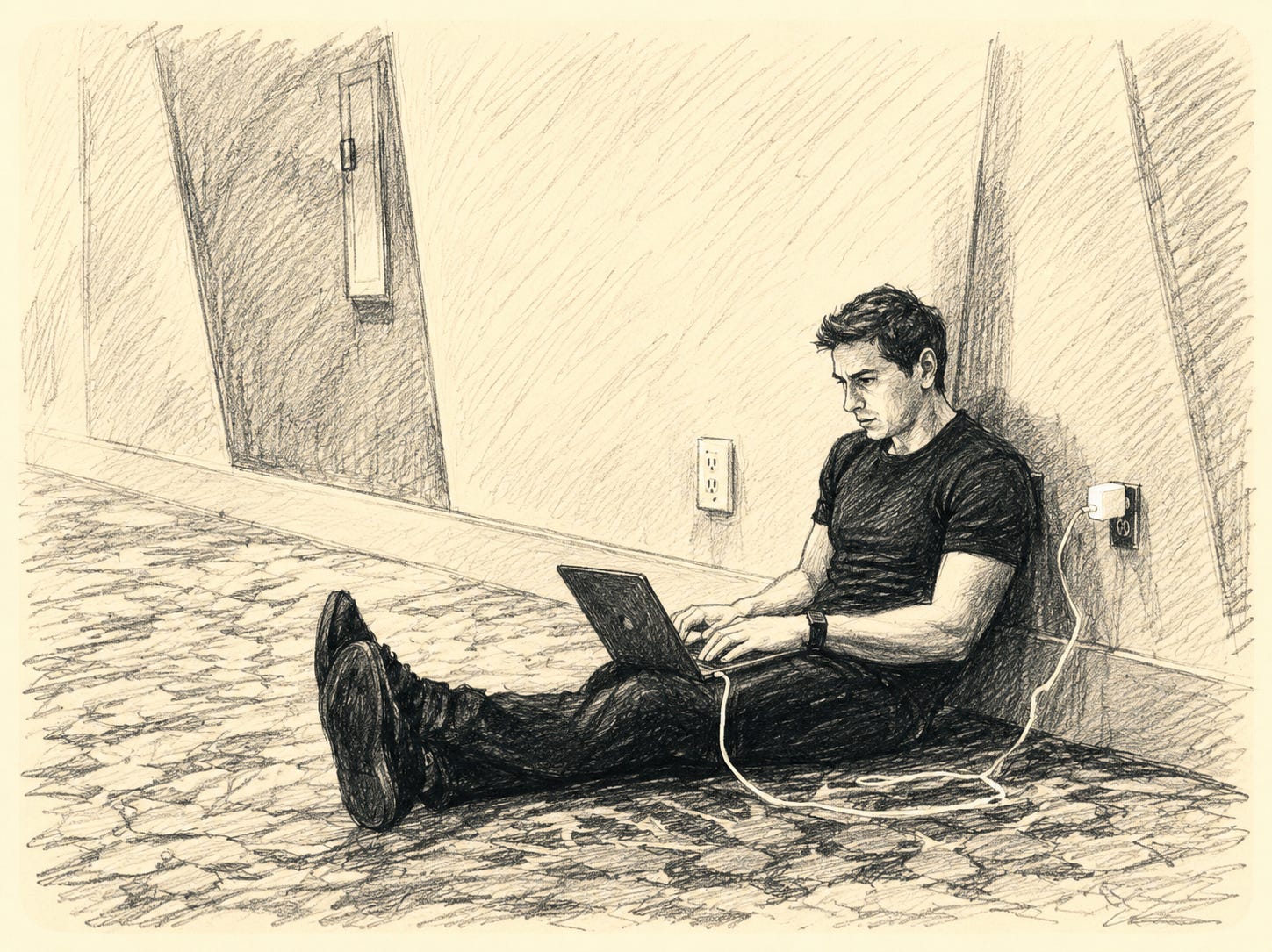
That’s my challenge for the next two weeks. Once again, I’ve exiled myself to a tropical location—Costa Rica (I am very relatable, I know). I’ve challenged myself to write a script in two weeks and share it with you for accountability. I will not use AI, except maybe for help with formatting. I will begin tomorrow morning, July 20. Which means I owe it to you on August 3.
Unlike in my previous exile, I’ll still be doing my day job(s). So I’ll be writing this exclusively during mornings and evenings.
I’ll report back when the job is done.
Get Your Free Copy of The Invisible List
Goodreads is sponsoring a giveaway campaign for The Invisible List. Enter here for a chance at a free copy.
Also, we’ve launched The Invisible Posse, a group of nearly 100 people from around the world who’ve committed to pursuing their passions. I hosted our first free workshop this week and have launched a community WhatsApp for people to share tips and progress. You can read more and sign up here.
I wrote Vampire's Kiss in two weeks.