
The Melt-Up
Start preparing now

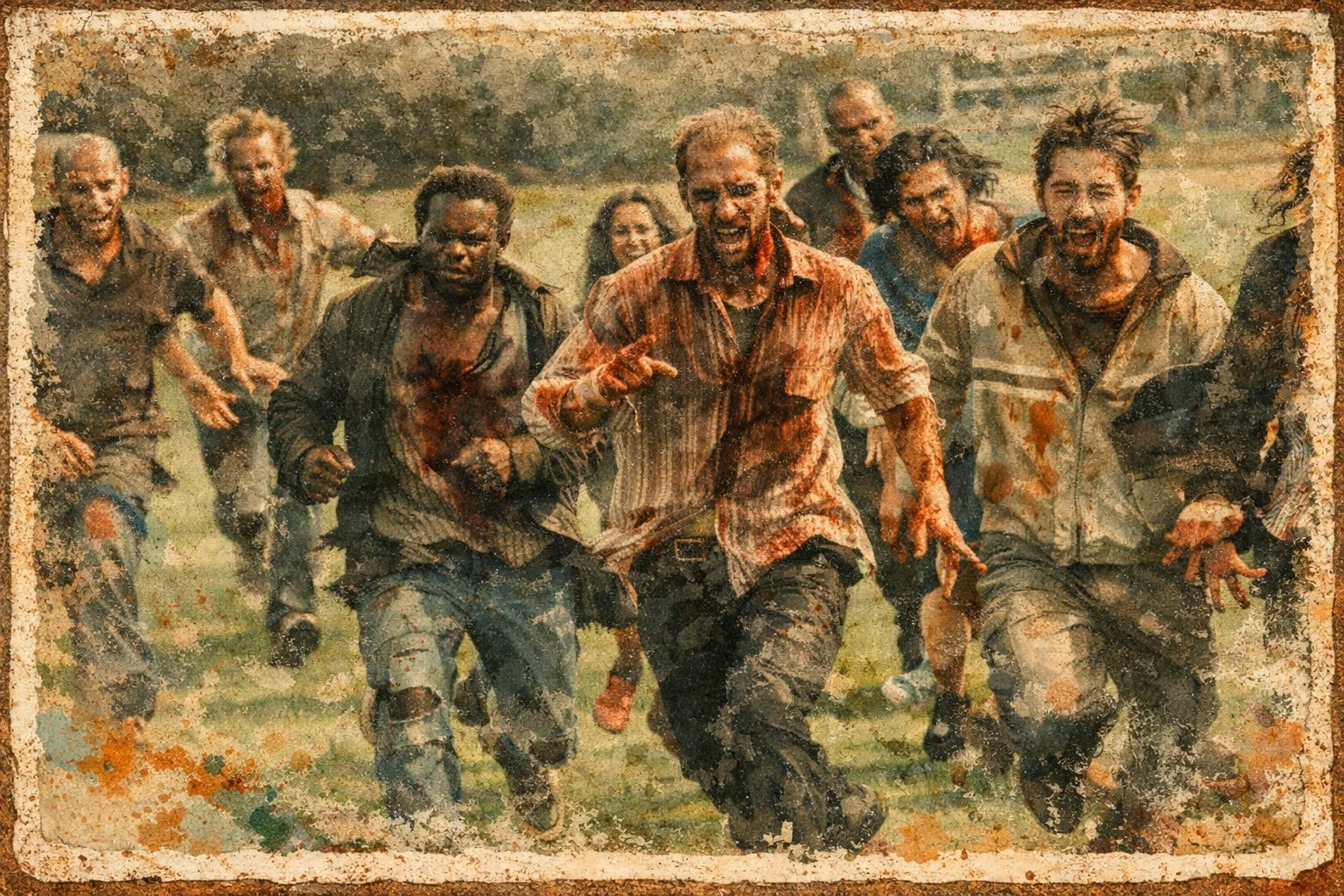
If you wanted to design a person whose job it was to ruin a good time, you might come up with someone like Jeremy Grantham. He's the most famous bearish investor alive, which is a little like being the most famous dentist — everyone knows he's probably right, nobody wants to hear from him.
Grantham has, in fact, been wrong (or too early, as he’d say) a few times, but he coined one term that we all need to wake up to. That concept is “the melt-up.”
A melt-up is the explosive, euphoric rally that happens right before a crash. Two to three years of dizzying gains. Everything going up. Everyone getting rich. The kind of run that makes you feel like a genius for having a Robinhood account.
And then your wealth vaporizes overnight.
If you’ve ever had a close friend or family member with severe bipolar disorder, you know the rhythm. The manic phase is intoxicating. Supernatural energy. Grand plans. A feeling of invincibility so total it’s almost beautiful to witness.
Until the bottom falls out.
I think we are in the midst of a societal melt-up.
Perhaps a civilizational one.
This pattern isn’t new. The Roaring Twenties gave America jazz, skyscrapers, consumer credit, the automobile, and the stock ticker — a dazzling burst of modernization that felt like the permanent arrival of the future. Then came 1929. The Roman Empire, at its zenith, had roads spanning continents, indoor plumbing, a legal code that still shapes ours, and a military so dominant it must have seemed eternal. It was not.
The melt-up always feels like progress. It is progress. That’s what makes it so dangerous.
Here’s what our melt-up looks like.
Personal AI agents that multiply your output by a factor of a hundred. A solo founder builds in a weekend what used to take a team of twelve, a year of runway, and a million in venture capital.
New cures for diseases we’d written off as death sentences.
Frictionless everything. Push a button. A bot handles it. Groceries, travel, taxes, repairs — the grind of daily life sanded down to a pane of glass.
And when your vintage espresso machine starts pulling shots that taste like battery acid, you don't need to find the one guy in Bologna who still services it. You ask a machine that's already read the Italian repair manual you didn't know existed.
For a window of time — maybe a short one — we will enjoy a quality of life better than anything we can currently imagine. Our parents will live a decade longer. We’ll build things without permission from gatekeepers or capital allocators, the same way podcasters and Substackers bypassed the media establishment a decade ago.
Ordinary people will have extraordinary leverage.
It will feel like the future finally arrived.
But sooner or later, the bill comes due.
The same productivity explosion that empowers you will eliminate entire sectors of the economy. Not disrupt them. Eliminate them. Unemployment at levels we have no modern framework to process.
The frictionless existence will produce a society of fragile, skill-less dilettantes — people who can summon anything but do nothing.
Instant answers to every question will kill the slow, uncomfortable process by which knowledge becomes wisdom. We’ll be the most informed and least wise civilization in history.
And the same technologies that cure diseases will be turned into weapons. Noah Smith recently laid this out in stark terms: AI models already outperform PhD-level virologists in practical lab problem-solving, and the economic logic of automation makes it nearly inevitable that humans will be removed from the loop in biological research. The implication is terrifying. A sufficiently motivated actor with access to the right model could engineer multiple simultaneous pathogens — highly transmissible, significantly lethal, hard to contain — without a graduate degree or a government lab.
And if it isn’t the engineered pathogen, there’s a menu of other catastrophes waiting in line. A cyberattack that takes down the power grid — not for hours, for weeks. An AI-generated deepfake that triggers a geopolitical crisis before anyone can confirm it’s fake. Autonomous weapons that don’t need a human to pull the trigger. Financial systems so automated and interconnected that a single algorithmic error cascades into a global collapse faster than any human can intervene. Infrastructure so dependent on AI that when it fails, we’ve forgotten how to run things without it.
Pick your disaster. There are plenty to choose from.
Is this melt-up inevitable?
I think it is.
There is no coach speak here. I’m not offering an inspiring alternative. I’m not going to tell you that if we just come together as a society and have hard conversations, we can thread the needle. I don’t believe that.
Our best-case scenario is that something really bad, but survivable, happens first. Something that jolts us into a reckoning before the unsurvivable thing arrives.
So what do you do with this?
Here’s my honest advice.
Think about your favorite end-of-days movie. 28 Days Later. The Walking Dead. The Road. Children of Men. Whatever keeps you up at night.
Now think about the person in that movie you’d want to be. The person who’s ready. The one who can grow food, fix an engine, purify water, stitch a wound, stay calm when the grid goes dark.
Think about what skills that person has. What kind of body. What kind of community. What kind of mind.
And start building that. Now. While the lights are still on and the bots are still peripheral and people still matter.
Or — and I mean this without judgment — just enjoy the ride on the way up.
Don’t think about the crash.
Order the cocktail. Let the bots handle more and more of your life. Marvel at the view from the top.
That's a legitimate choice too. The music on the Titanic was, by all accounts, excellent.
Well, you just put all of my most vivid fears into (your always brilliant) writing. I already have my role planned out for the apocalypse and my Xanax prescription full and at the ready. It’s definitely about to happen.
Super scary post and I’ve been thinking about stuff like this for years. That’s why I buy and keep a store of vegetable seeds, plant perennial fruits and vegetables (asparagus anyone?), keep my medical/dental checkups up to date, and own actual books and manuals so I don’t need to rely on computers. You know, survivor adjacent activities.
Your last four paragraphs were great! I think of that small group who played Nearer My God to Thee on the Titanic.